August 19, 2025 · 8 min · Houston
A Houston attic without proper ventilation can hit temperatures well over 150 degrees on a summer afternoon. That heat doesn't stay in the attic — it bakes your shingles from underneath, pushes your cooling bills up, and can shorten your roof's life by years. Ventilation is one of the most overlooked parts of a roofing system, and it's one of the first things we check during inspection.
Intake and exhaust have to work together
Attic ventilation only works as a balanced system. Exhaust vents at or near the ridge let hot air escape, but they can only pull in fresh air if there's enough intake ventilation lower on the roof, usually through soffit vents. A roof with plenty of ridge vent but blocked or insufficient soffit intake won't actually move much air — it just pulls hot air from wherever it can, sometimes back through gaps in the exhaust system itself.
Common exhaust options
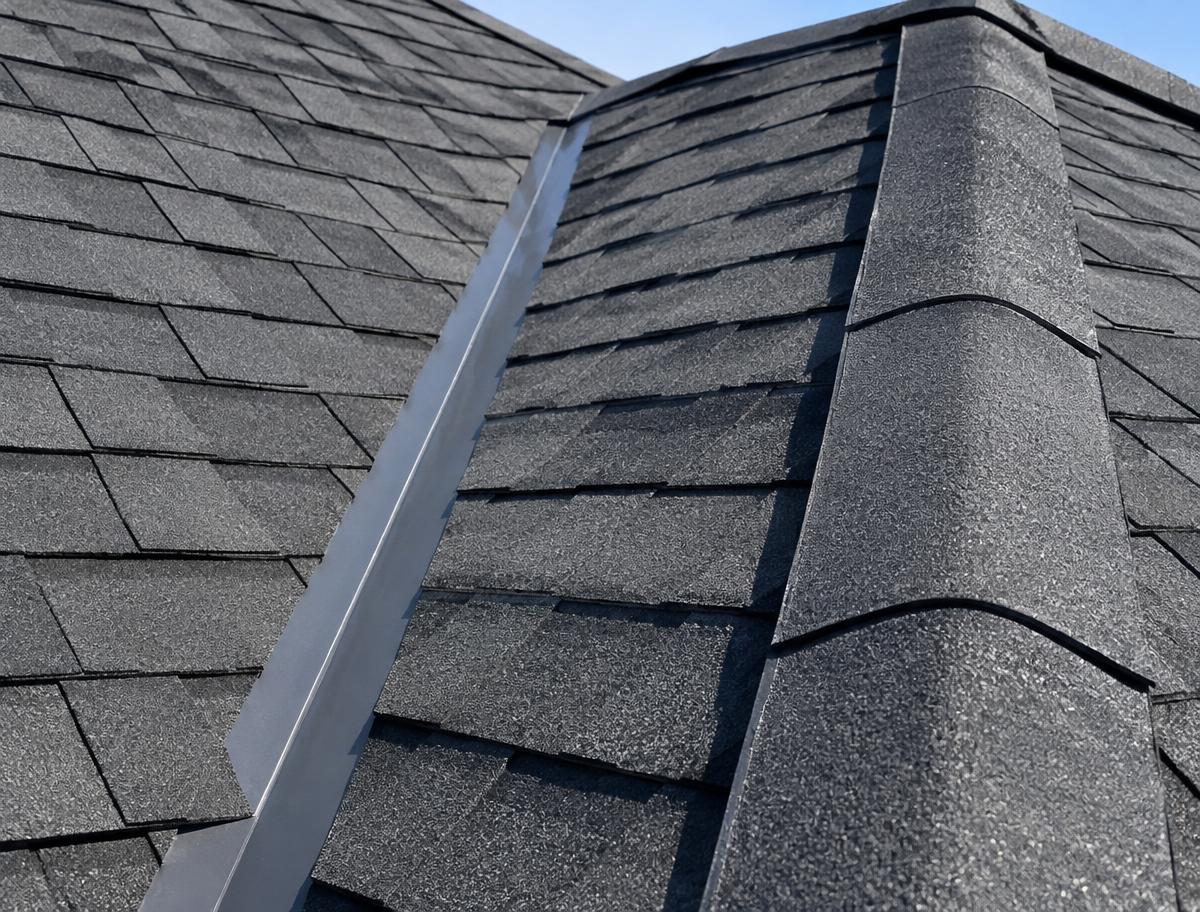
- Ridge vents: run continuously along the roof peak, low-profile and effective when paired with adequate intake
- Turbine vents: wind-driven, spin to pull hot air out; effective but dependent on wind and can be less consistent on still summer days
- Powered attic vents: use an electric fan to actively exhaust hot air, useful in attics with limited passive ventilation options, though they need a matched amount of intake to avoid pulling conditioned air up from the living space
Why balance matters more than any single vent type
We regularly find Houston attics with turbines or powered vents installed but almost no usable soffit intake because of old insulation blocking the eaves or undersized vent openings. Adding more exhaust without fixing intake doesn't solve the heat problem — it just changes where the imbalance shows up.
Radiant barrier decking
Radiant barrier is a reflective layer, sometimes built into the decking itself, that reflects radiant heat back before it transfers into the attic space. In a climate like Houston's, where the sun is intense for most of the year, radiant barrier decking can meaningfully reduce attic temperature swings when combined with good ventilation. We install radiant barrier decking as part of roof replacements for homeowners who want to reduce cooling load.
The impact on energy bills
A cooler attic means your HVAC system and ductwork — which often run through the attic in Houston homes — aren't fighting against extreme ambient heat all day. Homeowners who upgrade both ventilation and radiant barrier at the same time as a roof replacement often notice a real difference in summer cooling costs, though the exact savings depend on your home's insulation, duct condition, and HVAC efficiency.
The impact on shingle life
Shingles age from both sides — UV exposure from above and heat buildup from below. An overheated attic accelerates the breakdown of the asphalt in your shingles from underneath, which can shorten their usable life even if the shingle itself is a quality product. Manufacturer warranties on shingles often assume adequate attic ventilation; poor ventilation can even affect warranty claims down the line.
We've replaced roofs that were barely a decade old, cooked from underneath by an attic that never had proper airflow.
Signs your attic ventilation needs attention
- Attic noticeably hotter than expected even with insulation in place
- Shingles showing premature granule loss or curling despite being relatively new
- Musty or stuffy smell in the attic
- Visible mold or condensation on the underside of the decking, especially in winter
- Ice-dam-like moisture staining (rare in Houston, but a sign of trapped humidity when it happens)
What we check during inspection
- 1Soffit vent condition and whether insulation is blocking airflow at the eaves
- 2Ridge vent, turbine, or powered vent condition and coverage
- 3Balance between intake and exhaust net free area
- 4Presence or absence of radiant barrier
- 5Attic temperature relative to outdoor temperature on inspection day
Upgrading ventilation during a roof replacement
The most cost-effective time to fix ventilation problems is during a roof replacement, when the decking is already exposed. We can add or reroute soffit intake, install continuous ridge vent, and add radiant barrier decking as part of the project instead of as a separate, more disruptive job later.
Talk to us about your attic
If your energy bills feel high or your attic feels like an oven, it's worth having us take a look alongside your roof inspection. Call (832) 640-5347 or email redfishroofingcompany@gmail.com for a free inspection.
Frequently asked questions
Do I need both intake and exhaust vents?
Yes. Exhaust vents like ridge vents only work well when paired with enough intake, usually through soffit vents. Without balanced intake, exhaust vents can't move air efficiently.
What is radiant barrier decking and does it really help?
It's decking with a reflective layer that bounces radiant heat back before it enters the attic. Combined with good ventilation, it can meaningfully reduce attic temperature swings in Houston's intense sun.
Are powered attic fans a good idea?
They can help in attics with limited passive ventilation, but they need matched intake airflow. Without it, they risk pulling conditioned air from your living space instead of just attic air.
Can poor ventilation void my shingle warranty?
Some manufacturer warranties assume adequate attic ventilation, and poor ventilation can affect coverage in certain situations. It's worth addressing ventilation issues alongside any shingle replacement.
How do I know if my attic is properly ventilated?
Signs of a problem include unusually high attic heat, premature shingle wear, musty smells, or visible condensation. A professional inspection can measure the actual intake and exhaust balance.
Is it worth adding radiant barrier if I'm not replacing my whole roof?
It's most cost-effective during a roof replacement when decking is exposed, but standalone radiant barrier products can sometimes be added in the attic separately. We can advise which option fits your situation.